Инструкция для Yamaha PSR-175
 1
 2
 3
 4
 5
 6
 7
 8
 9
 10
 11
 12
 13
 14
 15
 16
 17
 18
 19
 20
 21
 22
 23
 24
 25
 26
 27
 28
 29
 30
 31
 32
 33
 34
 35
 36
 37
 38
 39
 40
 41
 42
 43
 44
 45
 46
 47
 48
 49
 50
 51
 52
 53
 54
 55
 56
 57
 58
 59
 60
 61
 62
 63
 64
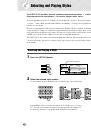
Selecting and Playing Styles
49
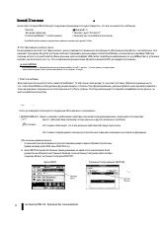
• • • • • • • • • • • • • • • • • • • • • • • • What is a Chord? • • • • • • • • • • • • • • • • • • • • • • • •
The simple answer:
Three or more notes played simultaneously is a chord. (Two notes played
together is an “interval” — an interval being the distance between two different notes. This is also
referred to as a “harmony.”) Depending on the intervals between the three or more notes, a chord
can sound beautiful or muddy and dissonant.
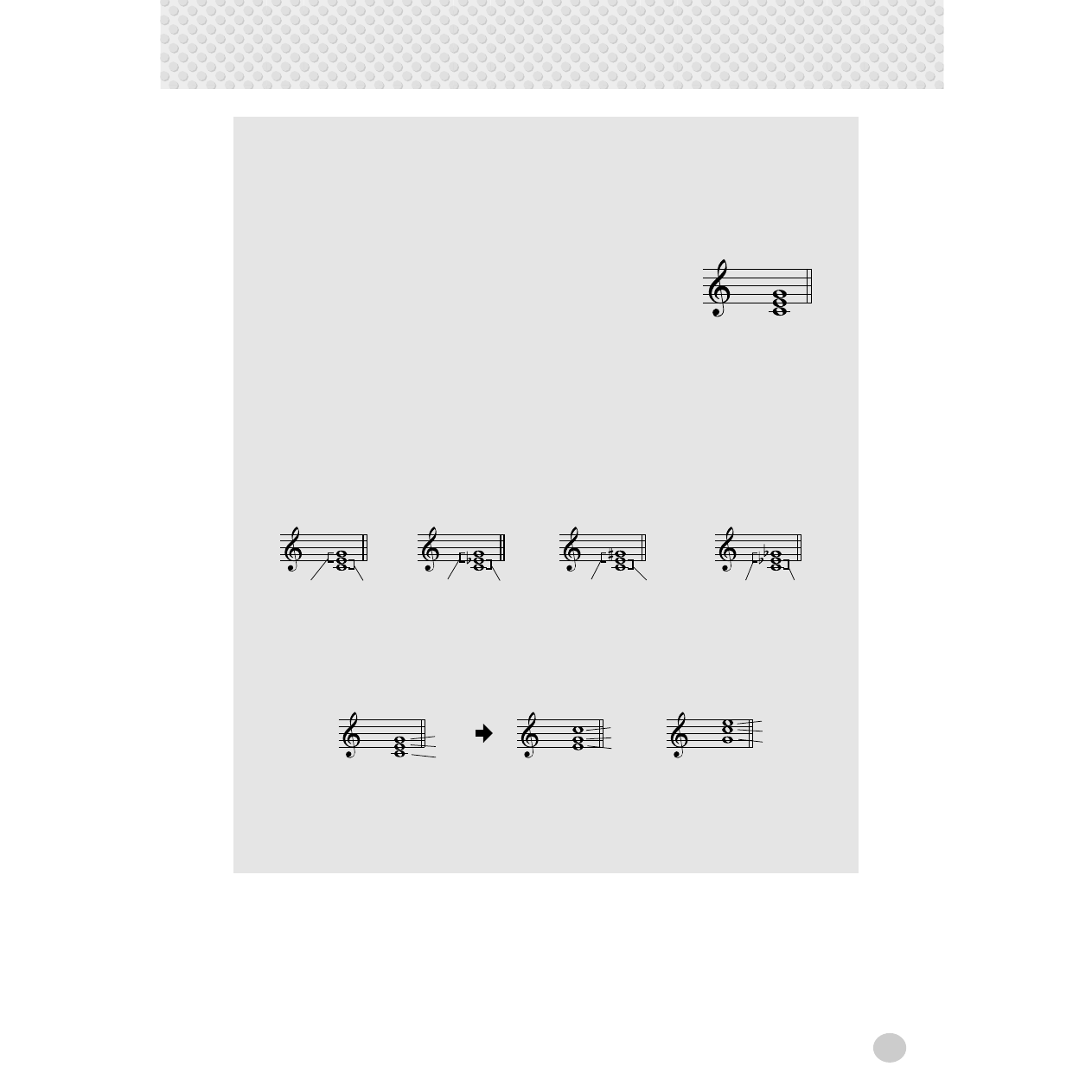
The organization of notes in the example at left — a triad chord — pro-
duces a pleasant, harmonious sound. Triads are made up of three notes
and are the most basic and common chords in most music.
In this triad, the lowest note is the “root.” The root is the most important note in the chord, because
it anchors the sound harmonically by determining its “key” and forms the basis for how we hear the
other notes of the chord.
The second note of this chord is four semitones higher than the first, and the third is three semitones
higher than the second. Keeping our root note fixed and changing these notes by a semitone up or
down (sharp or flat), we can create four different chords.
Keep in mind that we can also change the “voicing” of a chord — for example, change the order of
the notes (called “inversions”), or play the same notes in different octaves — without changing the
basic nature of the chord itself.
Beautiful sounding harmonies can be built in this manner. The use of intervals and chords is one of
the most important elements in music. A wide variety of emotions and feelings can be created
depending on the types of chords used and the order in which they are arranged.
Major chord
(ex. C)
Minor chord
(ex. Cm)
Augmented chord
(ex. Caug)
Diminished chord
(ex. Cdim)
Minor 3rd
Major 3rd
Major 3rd
Minor 3rd
Major 3rd
Major 3rd
Minor 3rd
Minor 3rd
Inversion examples for the key of C
G
E
C
C
G
E
E
C
G
Оглавление инструкции
- Cover
- PRECAUTIONS
- Contents
- Panel Controls and Terminals
- Setting Up
- Quick Guide
- Getting Started — Playing the Demo Songs
- Panel Display Indications
- Portable Grand
- DJ
- Selecting and Playing Voices
- Selecting and Playing Songs
- Song Lesson
- Talking
- Dictionary
- Selecting and Playing Styles
- MIDI
- Troubleshooting
- Voice List
- Drum Kit List
- Style List & Multi pads
- MIDI Implementation Chart
- Specifications
- Index